It’s not just food that can cause a symptomatic reaction. A new national analysis has revealed that the products in our bathrooms, laundries, kitchens and living areas — from toothpaste and deodorant to laundry powder, mould cleaners and feathers — are quietly triggering asthma, rashes, migraines and other symptoms in thousands of Australians.
The findings come from a report by FoodFit, a leading Australian provider of compatibility testing for food and household products since 1985. Each year, FoodFit receives around 5,000 symptomatology reports from natural health practitioners, and in the two years to June 2025 it analysed samples from 7022 individuals against more than 100 everyday household items. The analysis identified the top 30 items most frequently triggering symptomatic reactions. See the full report here: https://foodfit.com.au/news/2025/september/top-household-products-linked-to-migraines-anxiety-and-skin-flare-ups-in-thousands-of-australians.
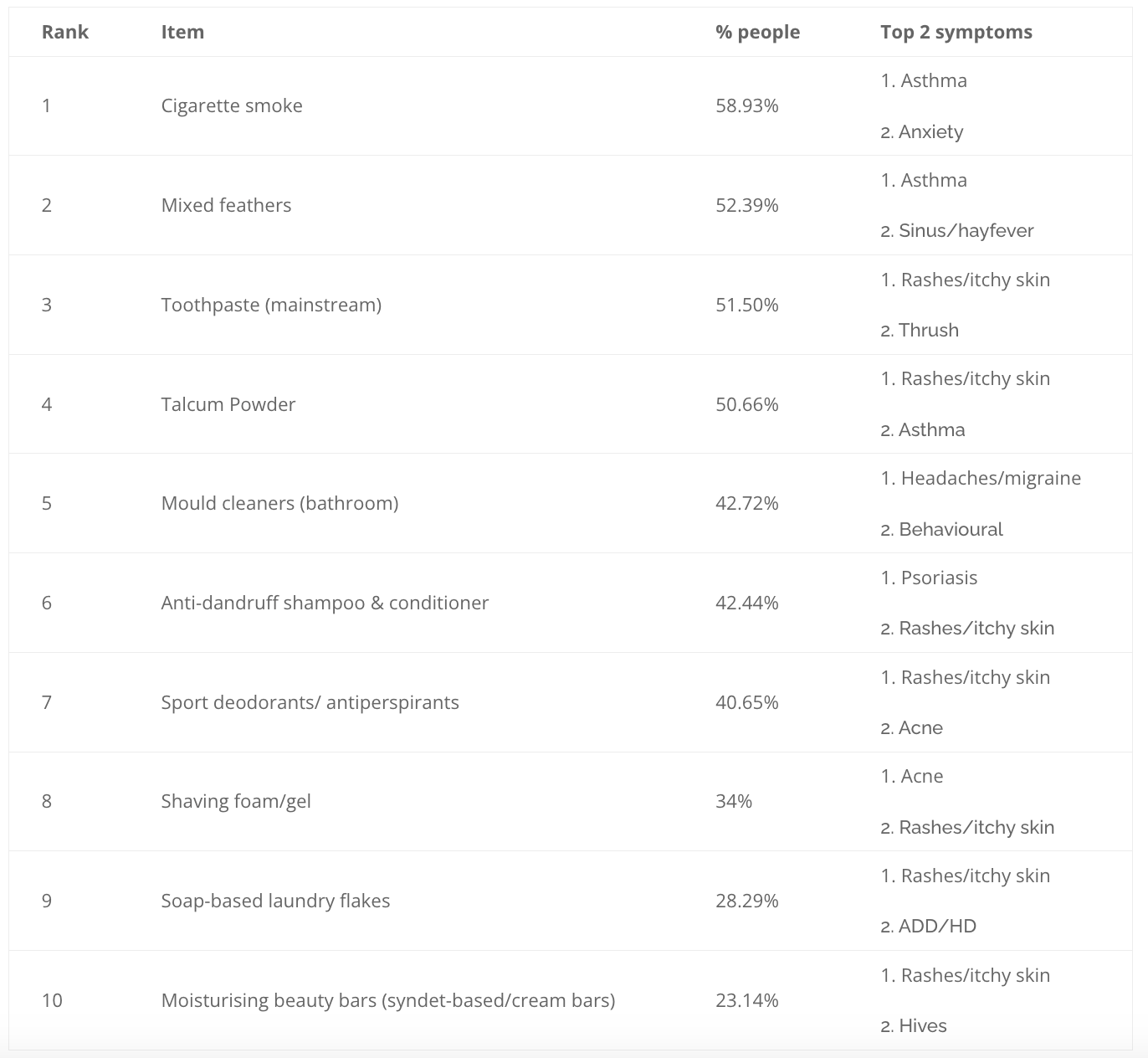
Topping the list is cigarette smoke, driving asthma or anxiety in 58.93 per cent; followed by mixed feathers, triggering asthma or sinus issues in 52.39 per cent of individuals; toothpaste, triggering rashes and thrush in 51.5 per cent; talcum powder, linked to rashes and asthma in 50.66 per cent; and mould cleaners, aggravating headaches and behavioural changes in 42.72 per cent.
Among symptoms, FoodFit’s analysis shows that asthma, rashes and headaches dominate the list. However, some links are surprising. Examples are aluminium aggravating brain fog, headaches, migraines, fatigue and muscle weakness; engine oil triggering dermatitis, respiratory irritation and eczema; and anti-dandruff shampoo aggravating psoriasis.
Dennis Hodges, founder and CEO of FoodFit, said: “Just like food, household products can also aggravate the body – especially when it’s already under stress from incompatible foods that the individual has consumed. Household products don’t have to be ingested to cause issues. They can be absorbed through the skin, inhaled into the lungs, or they can disrupt the body’s balance through ongoing exposure.
“Our data shows that everyday items like shampoo, toothpaste or feathers can become triggers when the system is already inflamed or overloaded. People often can’t connect the dots between a migraine or rash and their bathroom cupboard – but these exposures can tip an already stressed body into visible symptoms.”
FoodFit uses hair and saliva to test household products for compatibility, and then guides individuals through a short-term, practitioner-led elimination process to reduce inflammation and restore balance. Dennis says that many items can be reintroduced once the body resets.
FoodFit explains the body’s reaction to products in common 5 categories:
- Bathroom items. Shampoos, soaps and mould cleaners contain irritants and chemical compounds that can aggravate skin, respiratory and neurological systems. Dennis says: “Toothpaste choice is important, too. We’ve seen beneficial changes in individuals who have changed their brand. People can react to fluoride, and other chemicals can disrupt an individual’s oral microbiome.”
- Laundry products. Fragranced powders and softeners add to the body’s toxic load, with FoodFit testing showing links to headaches, rashes and respiratory problems. Dennis says: “Fragrance can often have a secondary effect on existing inflammation related to headaches.”
- Kitchen cleaners. Residue from dish liquids and sprays can cling to plates and cutlery, adding to chemical exposure if not rinsed thoroughly. Dennis says: “Not rinsing dishes after handwashing dishes in soapy water is quite common across households, but the key is to avoid consuming any soap residue at your next meal. At FoodFit, we don’t test dishwasher products as the dishes are usually very well rinsed and hence don’t tend to add to the toxic load.”
- Manchester. Bedding and pillows can harbour mites, microbes and dust that trigger asthma, hay fever and skin irritation. Mixed feathers, which include feathers in doonas and pillows, are a classic allergen that can create respiratory symptoms. Dennis says: “Bedding is a very important area, as many hours are spent in bed allowing our bodies to rest and repair. If the fibre we sleep in is incompatible, use cotton or bamboo bedding.” The FoodFit test also relates directly to chickens, birds and cages. Dennis adds: “As an example, an asthma client, who tested incompatible to feathers, discovered sparrows had built a nest outside his office window. Once the sparrows were gone, so was his asthma.”
- Petrochemicals. Fumes from petrol and diesel contain particulates that can irritate the lungs, trigger headaches and affect the nervous system. Dennis says: “People most impacted are those who work with petrochemicals, like mechanics, truck drivers and service station or refinery workers. Petrochemicals can be difficult to eliminate, as fumes from vehicles can also trigger reactions. It might help, when filling up the car, to use disposable gloves, wear a mask and avoid breathing in the fumes as much as possible.”
FoodFit’s Compatibility Program is available exclusively through qualified practitioners and involves testing for 600 whole foods (not isolated nutrients) and household items, and a guided, practitioner-monitored elimination plan. Individual results will vary from person to person, household member to household member.
Top 10 items aggravating symptoms in individuals[1] (see top 30 items in FoodFit’s report)
| Rank | Item | % people | Top 2 symptoms |
| 1 | Cigarette smoke | 58.93% | 1. Asthma
2. Anxiety |
| 2 | Mixed feathers | 52.39% | 1. Asthma
2. Sinus/hayfever |
| 3 | Toothpaste (mainstream) | 51.50% | 1. Rashes/itchy skin
2. Thrush |
| 4 | Talcum Powder | 50.66% | 1. Rashes/itchy skin
2. Asthma |
| 5 | Mould cleaners (bathroom) | 42.72% | 1. Headaches/migraine
2. Behavioural |
| 6 | Anti-dandruff shampoo & conditioner | 42.44% | 1. Psoriasis
2. Rashes/itchy skin |
| 7 | Sport deodorants/ antiperspirants | 40.65% | 1. Rashes/itchy skin
2. Acne |
| 8 | Shaving foam/gel | 34% | 1. Acne
2. Rashes/itchy skin |
| 9 | Soap-based laundry flakes | 28.29% | 1. Rashes/itchy skin
2. ADD/HD |
| 10 | Moisturising beauty bars (syndet-based/cream bars) | 23.14% | 1. Rashes/itchy skin
2. Hives |
[1] 2856 individuals who took the FoodFit compatibility test in the year ending June 2025.
See the full report here: https://foodfit.com.au/news/2025/september/top-household-products-linked-to-migraines-anxiety-and-skin-flare-ups-in-thousands-of-australians.
About FoodFit
Founded in 1985, FoodFit (originally known as Naturopathic Services) is an Australian provider of food compatibility testing and practitioner-led health tools and programs designed to identify and eliminate foods that may be aggravating the body at a cellular level. Unlike allergy or intolerance testing, FoodFit’s approach focuses on supporting the body’s natural healing by temporarily removing incompatible foods and restoring overall balance. On average, 5000 Australians a year have undertaken the FoodFit Compatibility Program, which is administered exclusively through trained healthcare practitioners across the country. Learn more at www.foodfit.com.au. Find a practitioner here: https://foodfit.com.au/consultants.